

As an Amazon Associate, I earn from qualifying purchases. Some links on this site are affiliate links. Portions of this content are generated by AI.
Here’s the honest answer up front: most Uber drivers in Las Vegas earn somewhere between $18 and $28 an hour gross — before gas, maintenance, and the wear you’re quietly putting on your car. The wide spread isn’t me hedging. It’s the reality of a gig where when and where you drive matters more than how many hours you log. A driver who works Friday and Saturday nights near the Strip during a fight weekend is playing a completely different game than someone grinding out fares on a Tuesday afternoon in the suburbs.
I’ve lived in Las Vegas for decades, and I watch how this city moves — the conventions, the concerts, the 2 a.m. surge when the clubs let out. If you’re thinking about driving here, or you’re just curious what the money actually looks like, let me walk you through it the way I’d explain it to a friend who asked me over coffee. No hype, no “make $500 a day!” nonsense. Just what’s real.
What Uber Drivers Actually Earn in Las Vegas
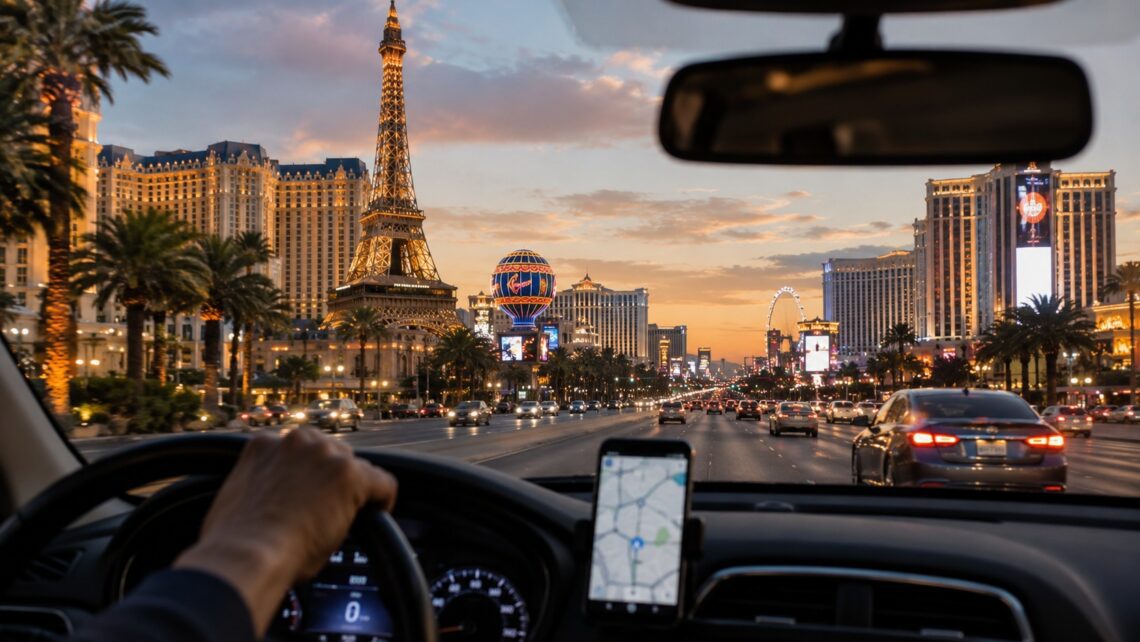
Pinning down a single number is tricky because every salary site measures it differently, and almost none of them subtract expenses. When you look across the major sources, the estimates for a Las Vegas Uber driver land roughly like this: Indeed puts the hourly average near $19 to $20, Salary.com lands around $18 an hour (about $39,500 a year), and Glassdoor’s driver estimates run higher, in the $28-an-hour range when tips and busy-period pay get folded in.
So which is right? Honestly, all of them — for different drivers. The lower figures reflect someone driving casual, off-peak hours. The higher ones reflect drivers who treat it like a business, chase surge, and work the hours Las Vegas actually pays for. What almost none of these numbers show is the part that eats your take-home: gas, oil changes, tires, brakes, insurance, and depreciation. When people tell me they “made $1,200 last week,” my first question is always, “Okay, but what did you spend to make it?”
A realistic way to think about it: your gross might be $22 an hour on a decent night, but after you back out fuel and set aside money for the maintenance you’ll inevitably owe, your true net is often closer to $13 to $17. That’s not a knock on the job. It’s just the math nobody puts in the flashy headlines, and it’s the math that keeps you from being shocked at tax time.
Can You Really Make $500 in a Day?
You’ll see this promise everywhere, so let me be straight with you: on a normal day, no. Not for the typical driver. If you drove hard for 10 to 12 hours on an average weekday, you’re realistically looking at $200 to $300 gross, and less than that in your pocket after expenses.
But Las Vegas is not a normal market, and this is where it gets interesting. On the right night — New Year’s Eve, a major fight, a huge convention like CES, a sold-out residency letting out at the same time as three other shows — surge pricing can stack in your favor in a way it never does in an ordinary city. On those specific nights, a sharp driver positioned in the right spot genuinely can push toward $400 or $500. The key word is positioned. Those numbers don’t come from luck. They come from knowing the calendar and knowing the map. More on that below.
Uber vs. Lyft in Las Vegas: Which Pays More?
People always want a clean winner here, and there isn’t one. Uber and Lyft pay comparably in Las Vegas, and which comes out ahead in a given week depends more on promotions, bonuses, and which platform is surging at the moment than on any built-in rate difference.
That’s exactly why so many of the drivers I’ve talked to run both apps at the same time. They keep both open, take whichever ride comes in first or pays best, and toggle between them to avoid dead time sitting idle. Every minute you’re parked with no rider is a minute you’re paying for gas and depreciation while earning nothing. Running two platforms is the single easiest way to shrink that dead time, and Uber has no rule against driving for a competitor. It’s your car and your schedule.
How to Become an Uber Driver in Las Vegas
The requirements are more specific in Nevada than a lot of the generic “here’s how to drive for Uber” articles let on, so let me give you the accurate version.
To drive for Uber in Las Vegas, you’ll need to:
- Meet Nevada’s minimum age. Uber’s minimum driver age in Nevada is 25. If you’re under 25, you’ll generally need at least three years of U.S. licensed driving experience; otherwise, at least one year.
- Hold a valid driver’s license that’s current and free of suspensions.
- Drive an eligible four-door vehicle with room for at least four passengers, and one that’s within the allowable age range and passes a safety inspection.
- Carry proof of registration and Nevada insurance in your name.
- Pass a background check covering your driving record and criminal history, which typically looks back about seven years.
- Submit a driver profile photo through the app.
There’s one more requirement that trips up a lot of new Nevada drivers, and I want to flag it clearly because the old version of this article skipped it entirely: Nevada requires rideshare drivers to hold a state business license. The state classifies Uber and Lyft drivers as transportation network company (TNC) drivers, and you’re expected to secure that license (the fee is roughly $200, renewed annually) shortly after you start. You’ll also need to display your TNC decal on the vehicle. It’s not optional, and it matters for your taxes too — you’re operating as an independent contractor, which means you’ll file a Schedule C and can deduct your mileage and expenses.
The application itself is genuinely simple. You download the Uber Driver app, upload your documents, consent to the screening, and wait — approval usually takes somewhere between a few days and a couple of weeks. The paperwork is the easy part. Understanding the market is what actually determines whether this is worth your time.
Driving the Strip and Harry Reid Airport
This is the part that makes Las Vegas different from anywhere else you could drive, and it’s where the real money separates from the average money.
The airport — Harry Reid International — is a constant firehose of demand. Flights land around the clock, and every one of them unloads visitors who need to get to their hotel. But the airport has strict rules: you have to use the designated rideshare staging and pickup areas, display proper trade dress, and be in driver mode in the TNC lot. Follow the rules and it’s one of the most reliable sources of fares in the city. Break them and you risk fines or removal.
The Strip is the other engine. Demand there is wildly uneven in a way that rewards drivers who know the rhythm. Show times, club closings, convention schedules, and the after-dinner rush all create predictable spikes — and Las Vegas surge pricing during those windows can be some of the best in the country. The drivers who do well aren’t driving more hours. They’re driving the right hours: late nights on weekends, big event days, and the chaotic, high-demand stretches when everyone needs a ride at once.
How to Actually Maximize Your Earnings
If you’re going to do this, do it like it’s a business, because it is one. Here’s what genuinely moves the needle, based on how the smart drivers in this city operate:
- Learn the calendar. Las Vegas runs on events. Conventions, fights, residencies, holidays, and festivals are your best-paying days, and they’re all published in advance. Plan your week around them instead of just driving whenever you’re bored.
- Chase surge intelligently. When the map lights up red and orange, that’s the city telling you where the money is. Position yourself near demand before it peaks rather than reacting after everyone else has already flooded in.
- Don’t follow the herd. If every driver rushes to the same casino, you’re all splitting the same fares. Sometimes staying in a slightly under-served pocket means the riders come to you.
- Run both apps. Cut your idle time by keeping Uber and Lyft open together and taking the better offer.
- Earn your tips. Tipping works like it does for a great server — it’s tied to the experience. A clean car, a friendly greeting, a phone charger, a bottle of water, and knowing your way around go a long way. In a tourist city, a good vibe genuinely pays.
- Track every mile and every dollar. Your mileage deduction is one of the biggest tax advantages you have as an independent contractor. Log it from day one. The drivers who skip this hand money back to the IRS they never needed to.
Is Driving for Uber in Las Vegas Worth It?
For the right person, absolutely. If you want to set your own hours, be your own boss, and you’re willing to treat it strategically rather than just clocking random time, Las Vegas is one of the better rideshare markets in the country — precisely because of the tourism, the events, and the surge those create. The flexibility is real, and so is the earning potential on the big nights.
But go in with clear eyes. This isn’t passive income, and it isn’t $500 a day. It’s a business where your car is your biggest expense, your local knowledge is your biggest asset, and your take-home depends on decisions you make about when and where to drive. Understand the true costs, work the hours the city actually pays for, stay compliant with Nevada’s licensing rules, and it can be a solid living or a strong side income.
As an Amazon Associate, I earn from qualifying purchases. Some links on this site are affiliate links. Portions of this content are generated by AI.

You must be logged in to post a comment.